

There's a category of call that comes in every year between 25 September and mid-November, and it rarely starts with the word "pest". Most often it's: "we lit our first fire and ever since, there have been bugs all over the living room". Sometimes small brown beetles flying towards the lamp. Sometimes black ants far bigger than usual. Sometimes spiders, woodlice and earwigs that seem to be coming out of the wall.
In nine cases out of ten, they aren't coming out of the wall. They're coming out of the pile of logs that's been sitting next to the stove for three days.
This is no minor detail: firewood is, along with moving boxes and second-hand furniture, one of the three main routes by which arthropods are introduced into a French home. And unlike the other two, it comes in deliberately, regularly, and in large quantities — a cord of wood is several hundred kilos of organic matter that has spent one to three years outdoors, in the shade, against the ground, in exactly the conditions that dozens of species are looking for.
The good news: almost everything can be sorted out through logistics, not chemical treatment. The bad news: one of the species involved really can attack your roof timbers, and that one deserves a closer look.
 Two rats, one grey and one white, gnawing a piece of bread against a black background
What actually lives in a woodpile
A stack of logs is a complete ecosystem
A cubic metre of wood stored outdoors is not an inert material. It's a stack of galleries, shrinkage cracks and gaps between bark and sapwood, with a moisture gradient and a stable temperature. In other words: an accidental insect hotel, often far better than the ones sold in garden centres.
You'll typically find four groups there:
- True wood borers, which feed on the wood or its fungi: bark beetles (subfamily Scolytinae), longhorn beetles of the genera Rhagium and Arhopalus, woodworm beetles, powderpost beetles. They lay their eggs in felled wood and develop for months beneath the bark.
- Predators and opportunists: spiders (house spiders, cellar spiders), harvestmen, rove beetles, ground beetles. They come to hunt the first group.
- Moisture-loving detritivores: woodlice, earwigs (Forficula auricularia), millipedes, slugs. They occupy the wood/soil interface.
- Social insects: ants, including carpenter ants of the genus Camponotus, wasps and bumblebees that sometimes shelter there late in the season, and — more rarely, but it happens — mice that nest in the heart of a well-packed pile.
Why they all wake up on the same evening
Outdoors, in October, these animals enter diapause or winter dormancy. Their metabolism slows, they stop moving, they wait for spring. It's a mechanism driven mainly by temperature.
Bring the log into a living room at 20 °C, set it down near a stove whose surface reaches 30 °C, and you're simulating an accelerated spring. Within 24 to 72 hours, bark beetle larvae complete their pupation, adults emerge from their galleries, ants leave their overwintering chamber, spiders resume hunting. They then look for light and a way out: your windows, your lamps, your ceiling lights.
Hence the classic pattern: nothing for weeks outdoors, then an apparent explosion within 48 hours of bringing the wood inside.
What we see in the field: in almost all of these call-outs, none of these species establishes itself lastingly in the home. They die within a few days of dehydration, for lack of moisture and food. The problem is one of nuisance and disgust, not colonisation — except for two exceptions, covered below.
The species that pose a real problem
Carpenter ants (Camponotus spp.)
These are the largest ants in mainland France: 6 to 15 mm for the workers, black or bicoloured black and red depending on the species (Camponotus ligniperda, Camponotus herculeanus, Camponotus vagus). They don't eat wood — they hollow it out to build their nest, favouring damp, degraded wood or wood partly broken down by fungus.
A split stump or a large oak log stored for three years against a north-facing wall is an ideal nesting site. And if you bring that log in with part of a colony inside it, and your house then offers a lasting source of moisture — the base of a wall behind a poorly ventilated stove, a joist in contact with damp masonry, a leaking skylight frame — establishment becomes possible.
The signs to watch for:
| Indicator | What it means |
|---|---|
| Workers over 8 mm indoors in winter | Active colony nearby, not just a passer-by |
| Small heaps of fine, fibrous sawdust ("frass") | Active excavation in a piece of timber |
| Audible rustling inside a partition at night | Sizeable nest, often a satellite one |
| Winged ants indoors in spring | Colony mature for several years |
A Camponotus colony in a roof structure won't be solved with a supermarket aerosol: you need to locate the main nest (often outdoors, in a stump or a tree) and treat with a slow-acting bait that the workers carry back to the brood. This is exactly the kind of case where a professional inspection saves two years of pointless DIY.
The house longhorn beetle (Hylotrupes bajulus)
This one doesn't come from hardwood firewood — it attacks the sapwood of softwoods: fir, spruce, pine. If you store offcuts of roof timber, pallets or softwood formwork, and your own roof structure is untreated softwood, the physical proximity increases the risk of egg-laying.
Its damage is structural: the larvae tunnel through the sapwood for 3 to 10 years before emerging through an oval hole 5 to 10 mm across. It's the only insect on this list that can genuinely compromise the mechanical strength of a roof structure. Detection relies on sound (audible chewing in warm weather), on sawdust, and on probing the sapwood with an awl.
The storage rules that solve 90% of the problem
 Brown rat with a pointed snout and long whiskers, crouching on gravel near a wooden plank
1. Never against the house, never against the ground
This is the most frequently broken rule, and the most effective one. A woodpile leaning against a façade creates a bridge: moisture trapped against the render, a continuous corridor for ants and rodents, a wasp shelter under the eaves.
Good practice:
- 50 cm minimum between the pile and any wall of the building — 1 m is better, air needs to circulate behind it.
- On a raised support: pallets, beams, ground sills. Never directly on soil or grass, which draws moisture up and invites woodlice, slugs and Camponotus.
- Cover the top, not the sides. A tarpaulin wrapped around the whole pile turns the wood into a damp chamber. A firewood tarpaulin laid on like a roof, overhanging by 20 cm, with the sides left open, gives the best drying.
- Well away from compost bins, stumps and dense hedges, which are the original reservoirs.
2. Only bring in what you'll burn within 24 to 48 hours
This is the second golden rule, and on its own it's enough to make the "living room bug" disappear. The log basket in the living room should hold no more than a day or two of fuel. If a larva wakes up, the log goes on the fire before it has time to emerge.
A wheeled log cart with a removable tub helps enormously here: you fetch just the right amount, bring it in, burn it, go back out. Intermediate storage for three weeks in the attached garage, on the other hand, is exactly what you shouldn't do — that's where emergences happen.
3. Shake, knock, inspect
Thirty seconds per armful. Knock two logs together outdoors, turn them over, take a look. This one gesture dislodges most spiders, earwigs and woodlice before they cross the threshold. A pair of cut-resistant handling gloves makes the job far more pleasant — and prevents splinters and stings from insects sheltering in a crack.
Bark that peels away easily is a telltale sign: that's where the bark beetle galleries are. A log whose bark lifts off with a flick of the fingernail, revealing a star-shaped network of galleries, is a log to burn first.
4. Dry wood interests almost no one
Wood below 20% moisture, well split, stored for two years under a ventilated shelter, attracts neither Camponotus (which wants moisture) nor most borers of fresh wood. Seasoning is therefore an anti-insect measure as much as a matter of heat output and chimney cleanliness.
A firewood moisture meter costs about as much as a weekly food shop and settles the argument once and for all: below 20%, wood burns cleanly, fouls the flue less and harbours less wildlife. Above 25%, you're heating water and housing insects.
5. What you absolutely must not do
- Don't treat firewood with insecticide. It's going to be burned: residues of pyrethroids or wood-treatment products end up in the smoke and in the ashes. That's a pointless contamination of your indoor air and your flue. No serious professional treats a stock of wood destined for the hearth.
- Don't put logs in the oven or the microwave. Beyond the very real fire risk, the heat drives the insects out… into the kitchen.
- Don't store wood in a cellar, a basement or an occupied crawl space. Constant moisture + darkness + proximity to joists = the combination that creates genuine roof-timber cases.
- Don't bring in wood covered in moss or fungi: that's the marker of prolonged dampness, and therefore of the profile that interests carpenter ants.
The particular case of the Paris region and deliveries
In urban and suburban Île-de-France, most wood isn't cut by the occupant: it's delivered in nets, on pallets or loose, often through online sales platforms. Checking on delivery therefore becomes the only opportunity to sort it.
A few things to check as it's unloaded:
- The presence of soil and dead leaves in the net: a sign it was stored directly on the ground at the supplier's, and therefore carries a high biological load.
- Untreated softwood pallets, to be kept separate from the hardwood and not stacked against a building.
- Large-diameter unsplit logs: they keep their bark and their moisture and concentrate wildlife. Splitting is a sanitation measure as much as a combustion one.
- Nets stored on an apartment balcony or terrace: in a block of flats, a woodpile in a recessed corner of a balcony becomes, within a few months, a shelter for spiders, pigeons and sometimes wasps late in the season. A simple raised shelf solves the problem, provided you respect the building's rules on permissible loads.
 Young rodent with brown fur, crouched on the ground near seeds, in a dark corner, close-up
What to do when the insects are already in the house
Identify before you act
The difference between "a few bark beetles that came out of a log" and "a Camponotus colony established in a purlin" comes down to three observations: size, location and persistence.
- Beetles 2 to 5 mm long flying towards the windows within 72 hours of bringing the wood in, then disappearing → emergence from logs, nothing to treat.
- Insects reappearing every day for more than two weeks, even though the indoor stock has been burned → source within the building fabric, inspection required.
- Sawdust at the foot of a beam, a door frame or a floor → structural investigation, with probing of the timber.
Useful short-term measures
The vacuum cleaner remains tool number one. Vacuum up, then take the bag out or empty the canister outdoors immediately. No aerosol insecticide in a heated room where children and pets live: the risk-benefit balance is poor for insects that will die on their own within 48 hours.
Two genuinely useful extras:
- Glue boards or sticky insect traps placed discreetly on the floor against the stove wall: they catch the crawlers and, above all, they document what's moving around, which helps with diagnosis.
- A brush door seal on the door leading to the garage or the wood store, cutting off the route most used by woodlice and earwigs.
When to call a professional
A pest control professional has no business in a story about bark beetles emerging from a beech log. Calling one is, however, fully justified in four situations:
- Repeated appearances of large black ants indoors in the middle of winter.
- Sawdust, oval holes or chewing noises in a piece of roof timber or flooring.
- Discovery of a wasp or hornet nest in a wood store — a common case in September and October, when the colony is at its peak strength.
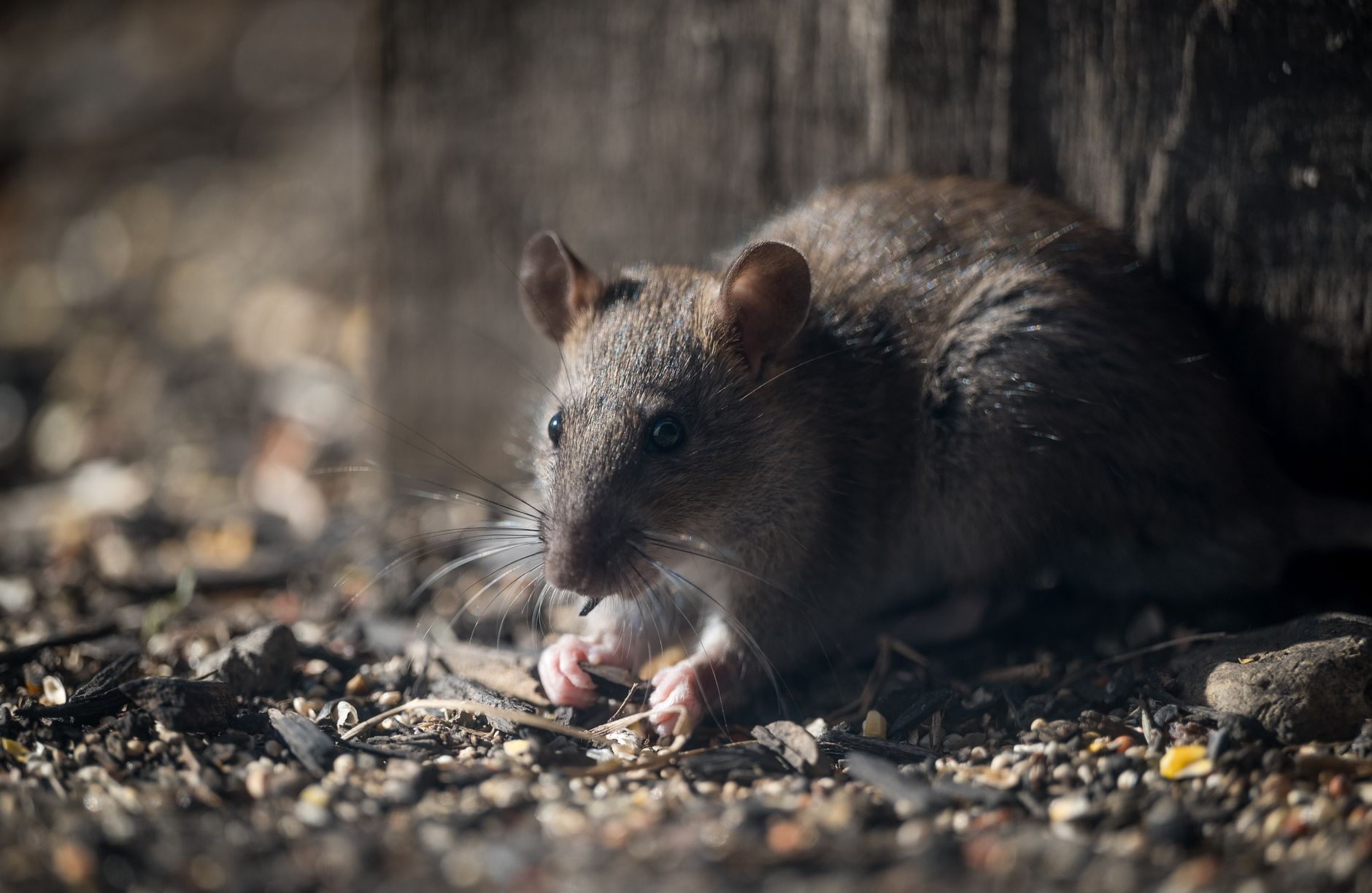
- Signs of rodents (droppings, gnawed wood, nests of material) in a stock adjoining the home: a woodpile pressed against the house is one of the favourite shelters for field mice and house mice before winter, as ANSES regularly points out in its recommendations on integrated rodent management.
The operational summary
| Action | Effect |
|---|---|
| Pile at least 50 cm from the building | Cuts the ant / rodent / moisture bridge |
| Wood raised on pallets | Removes the damp soil interface |
| Tarpaulin on top only | Dries instead of fermenting |
| Bring in 24–48 hours of wood maximum | Prevents any indoor emergence |
| Knock and inspect every armful | Removes 80% of visible passengers |
| Split and season below 20% moisture | Makes the wood uninteresting to borers |
| No insecticide on the wood | Avoids residues in the smoke |
Firewood isn't a pest. It's a vector — and a vector is managed through logistics. Households that apply the 48-hour rule and the 50 cm rule generally don't call us back the following autumn. Those who store three cubic metres in the garage attached to the house, against the wall shared with the living room, call us every year, and sometimes about roof-timber damage that could have been avoided.
For any suspicion of carpenter ants, house longhorn beetle or a wasp nest in a wood store in the Île-de-France region, our teams carry out an on-site inspection and a free quote, seven days a week. A doubt about some sawdust or a hole in a beam can be settled in ten minutes — and that visit costs infinitely less than reinforcing a roof structure.
Got a pest problem?
Our certified technicians are available 7 days a week. Free quote within 24h.
Read also
- Spiders in the house in September–October: what's really going on (and why insecticide is a bad idea)Read the article
- Pharaoh Ants in Apartment Buildings: Why Standard Insecticides Make the Infestation Worse (and What to Do Instead)Read the article
- Ants in the Kitchen in September: Why Autumn Triggers a Second Wave of InvasionRead the article