

The question now comes in almost every week, and it has nothing to do with booking a treatment: "Our candidate is promising a city-wide rat-control plan. Can we stop paying for our building's contract?" Or the opposite, more resigned version: "Anyway, it's up to the council to sort this out — there's nothing we can do."
Both sentences rest on the same confusion. With the municipal elections approaching, pests have become an electoral talking point — and for good reason: the Ipsos survey reported in February 2026 is a reminder that nearly two French people in three have been through an infestation in the past five years, at an average cost to households of several hundred euros. An issue that widespread inevitably ends up in campaign literature.
But a local council controls only part of the lever. It is powerful on public property — sewers, roads, parks, markets, schools, municipal buildings — and almost entirely without direct means of action inside private buildings, where the bulk of rodent, cockroach and bed bug infestations actually play out. A programme that fails to distinguish between these two terrains is promising the impossible.
This article offers a concrete framework for reading them: what a mayor can genuinely do, what they cannot do, the commitments that have a measurable effect on the ground, the purely decorative announcements, and what will in every case remain the responsibility of the building manager, the landlord or the occupant.
 Rusty cast-iron manhole cover with a square grating, with a scrap of fabric and debris to one side
What the council genuinely controls
A mayor wears two distinct hats, and that is the source of most misunderstandings.
As the municipal policing authority (articles L.2212-1 and L.2212-2 of the French General Code of Local Authorities), the mayor is responsible for public safety, security and sanitation. It is on that basis that they can act on a situation of unfit housing, serve formal notice on a negligent owner, or issue a by-law on waste management.
As the manager of public property, the mayor decides on resources: the number of rat-control visits to sewers and gully drains, the type of street bins, how often markets are cleaned, the renewal of the underground container fleet, the upkeep of riverbanks and green spaces.
Responsibilities break down roughly as follows:
| Terrain | Who acts | Council's lever |
|---|---|---|
| Sewers, trunk mains | Council / wastewater authority (SIAAP in the Paris region) | Direct and decisive |
| Roads, bins, markets | Council | Direct |
| Parks, squares, riverbanks | Council | Direct |
| Schools, nurseries, sports halls | Council | Direct |
| Social housing | Housing provider (sometimes a municipal body) | Indirect, sometimes strong |
| Communal areas of a block of flats | Building manager | Formal notice, injunction |
| Private flat | Occupant / owner | Very limited |
In other words: a mayor can drain the urban reservoir, but they won't be coming round to treat your kitchen. That boundary is precisely the one election campaigns tend to blur.
The five commitments that genuinely make a difference
Some municipal measures have a documented effect that industry professionals can observe on the ground. Here are five of them, worth looking for in a manifesto.
1. Moving from one-off rat control to integrated pest management
"One-off" rat control, triggered by reported sightings, is a losing race: the brown rat (Rattus norvegicus) rebuilds its numbers extremely quickly, and a single female can produce several litters a year. A council that commits to an integrated pest management plan — mapping of hotspots, mechanical traps and capture stations alongside baits, a schedule of visits, activity monitoring through indicator stations — achieves lasting results. The vocabulary is a good signal: if a programme talks about "mapping", "monitoring stations" and "reducing resources", it was written with technicians. If it only mentions "stepped-up rat-control campaigns", it's a slogan.
2. Going after the food supply
A rat only stays where it eats. Measures that cut down accessible food have more impact than doubling the amount of bait:
- replacing open street bins with closed, tamper-resistant models;
- underground containers or bins with lockable lids in dense neighbourhoods;
- tighter waste presentation times (putting bins out in the morning rather than the night before);
- hosing down market pitches once the stalls come down;
- clear rules on feeding pigeons and free-roaming cats, with managed dispensers rather than plates left on the ground.
That last point is politically sensitive, but it is one of the most effective. A manifesto that dares to spell it out is a serious manifesto.
3. A real environmental health service, not a hotline
Plenty of councils announce a "reporting platform". The question to ask is this: how many sworn officers sit behind it? A municipal hygiene and health service staffed with sanitation inspectors can visit, record findings, draw up a report and issue formal notice. A reporting app with no staff produces a dashboard, not a drop in infestations. Ask for the number of full-time equivalents — the answer is revealing.
4. The Asian hornet component
Since the Asian hornet (Vespa velutina) was classified as an invasive alien species of concern and a national control plan was put in place, councils and inter-municipal bodies can co-fund nest destruction. The schemes vary enormously: some cover a flat-rate share, others the full cost but only on public land, others nothing at all. A commitment with figures attached ("€X covered per reported nest, including on private land") can be verified; a "mobilisation against the Asian hornet" cannot.
5. The bed bug support fund
This is the measure that separates councils most sharply. Treating a home infested with Cimex lectularius costs several hundred euros, and the poorest households simply give up, which feeds the spread throughout the building. A few local authorities have set up support funds, free inspections or contracted services. Here again, two questions: what is the cap, and what are the eligibility criteria?
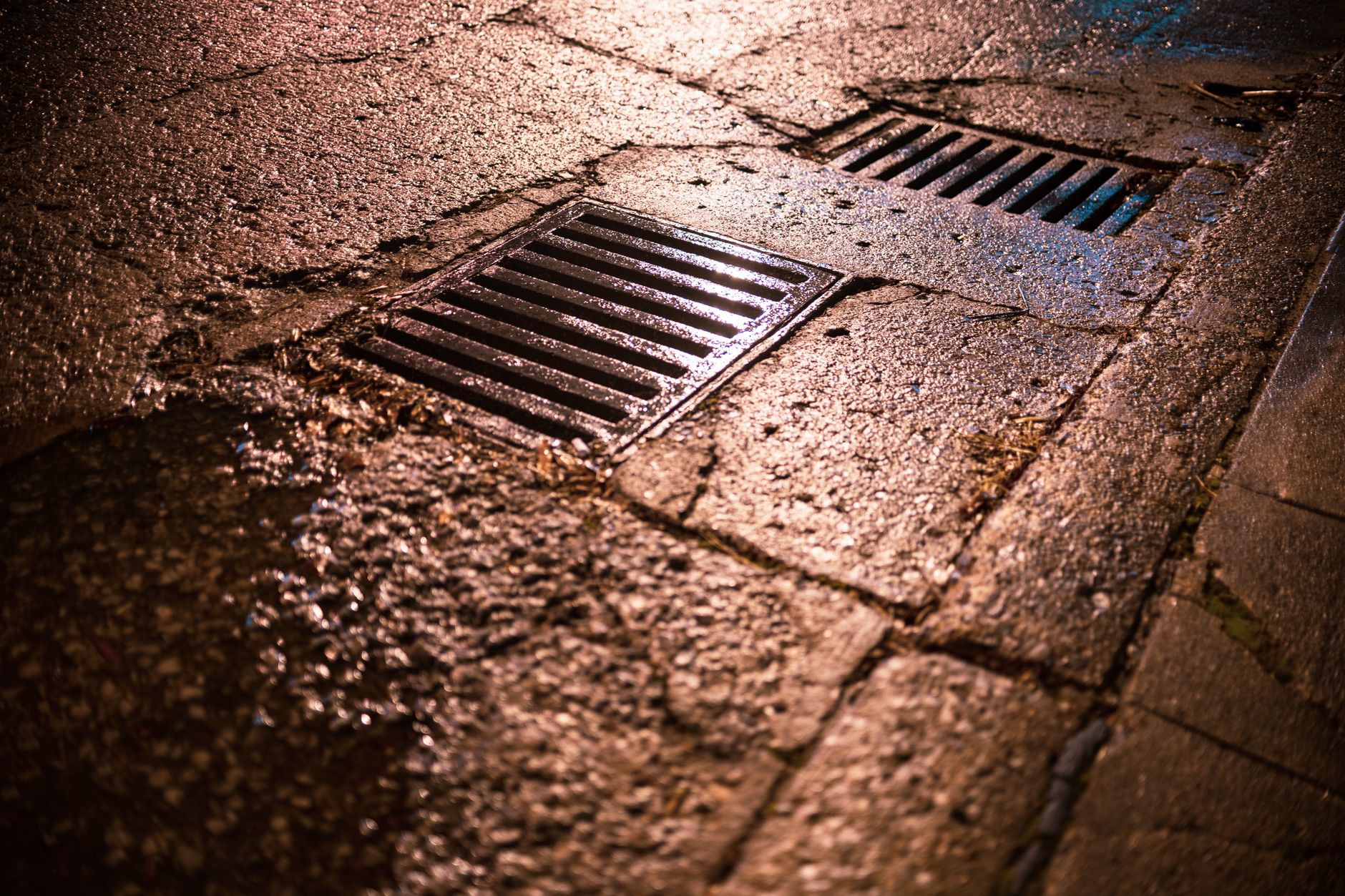 Metal drain gratings on a wet cobbled pavement at night in an urban street
Announcements to treat with caution
Certain formulas come back campaign after campaign and never survive a term in office.
"Eradicating rats from the city." No dense metropolis has ever eradicated its brown rat population. The realistic technical goal is to push numbers below the nuisance threshold and hold them there. Promising eradication amounts to promising a visible failure within two years.
"Free rat control for every resident." A council can treat its own buildings and public property, and sometimes offer subsidies. Treating every private home free of charge would shift onto the municipal budget a cost that legally falls to owners and to blocks of flats — in the Paris region, the departmental sanitation regulations in fact require building owners to take the necessary measures against rodents and insects in communal areas.
"Banning chemical products." The intention is laudable and chimes with ANSES warnings about consumer use of certain biocides, but rodent control without any rodenticide at all requires massive investment in mechanical trapping, proofing of the building fabric and waste management. Without that budgetary counterpart, a ban simply translates into a resurgence.
"A pest liaison officer for every neighbourhood." Useful if that officer has a budget and a reporting line. Decorative otherwise.
What will remain your responsibility, whatever the result
This is the part manifestos pass over in silence, and it accounts for most of the real work.
In a block of flats
The building manager is responsible for maintaining the communal areas. In practice, that means an annual rat-control contract covering cellars, bin rooms and service shafts, plus an inspection of entry points. The work with the best return is often the least spectacular: sealing service penetrations, stainless steel air vents, metal cellar door bottoms. A stainless steel air vent grille screwed over a basement window costs a few euros and permanently blocks a route that three baiting campaigns would never have closed.
On the agenda of the next general meeting, three resolutions are worth more than any election promise: the integrated pest management contract, the sealing of entry points, and locking the bin room.
In your home
The basics haven't changed, and they determine most of the outcome:
- store dry goods — flour, rice, pasta, pet food — in airtight glass containers rather than their original packaging;
- fit a brush door sweep to your front door and to the utility cupboard door: a mouse gets through 6 mm, a rat through 20 mm;
- watch for the first signs rather than established populations — an insect-monitoring glue trap placed behind the fridge or under a bed gives you a diagnosis within days, with no product involved;
- in a block of flats, report in writing to the building manager at the very first sign: a paper trail is what triggers action, and what protects you in the event of a dispute.
If you're a tenant
The property must be fit for habitation and free of infestation when the keys are handed over. Where an infestation is established in the communal areas or stems from a defect in the building, the cost falls to the landlord. Reporting by registered letter, then referring the matter to the municipal environmental health service or the regional health agency, remains the most effective route. Municipal campaigns change nothing here: it is the written record that moves a case forward.
 Close-up of a rusty cast-iron manhole cover, a grimy urban grating
The six questions to ask at a public meeting
The neighbourhood meetings running between now and spring are a chance to move from slogans to figures. Six questions are enough to assess a manifesto:
- What is the current annual pest control budget, and by how much are you increasing it? Without a figure, there is no commitment.
- How many sworn officers does the environmental health service employ? That is the real inspection capacity.
- How often are gully drains and trunk sewers treated, and how is that monitored?
- What is the waste plan: underground containers, collection times, markets? That is where the food supply is decided.
- Is there any financial help for households facing bed bugs and hornet nests, and what is the cap?
- How does the council coordinate with social housing providers and building managers? A building treated in isolation gets reinfested by its neighbours.
A team that answers these six questions precisely has done its homework. A team that answers with indignation has not.
What professionals see on the ground
Field operators notice the same thing at every election cycle: the councils that achieve a lasting reduction are not the ones that announce the most, but the ones that sustain three things over the long term. A network treatment schedule that doesn't depend on press alerts. A waste policy that physically reduces access to food. And an environmental health service with the power to compel failing owners.
Those three pillars don't make good slogans. Yet they explain why two neighbouring towns, with comparable building stock, can show radically different levels of infestation.
To dig deeper beyond the campaign, a practical guide to biological pest control in the garden offers useful pointers on the logic of the urban ecosystem: reduce harbourage and resources before thinking about products. That is exactly the reasoning you want to see in a municipal plan.
Until March, the best strategy remains the one that depends on no ballot at all: get the contract and the proofing works voted through at the general meeting, report in writing, and treat at the scale of the whole building rather than a single flat. Votes come and go; entry points stay.
Useful sources and references: Ipsos survey on pest infestations in France (2022, reported in 2026); French General Code of Local Authorities, articles L.2212-1 and L.2212-2 (the mayor's policing powers); departmental sanitation regulations (owners' obligations regarding rodents and insects); ANSES, opinions and warnings on consumer use of biocidal products; Ministry of Agriculture, national Asian hornet control plan.
Got a pest problem?
Our certified technicians are available 7 days a week. Free quote within 24h.
Read also
- Building work or façade renovation next door: why rats show up in your building three weeks after the job startsRead the article
- Dead animal smell in a wall: how to locate and remove a dead rodent inside a partitionRead the article
- Closing Up Your Holiday Home in October: 9 Checks That Stop You Finding a Nest of Rodents in SpringRead the article