

The same scenario plays out every spring in condominiums across the Paris region. Since the autumn, residents have been reporting rats in the courtyard, mice in the cellars, droppings behind the refuse chutes. The managing agent calls in a company on an emergency basis, two or three times, charged to the emergency works budget. Then comes the general meeting: the "rodent control contract" resolution is placed on the agenda, a single quote is read aloud, nobody understands what it actually covers, and the resolution is rejected or deferred to the following year "to obtain other quotes." Twelve months lost, and an infestation that has had time to colonise two more stairwells.
The problem is almost never the co-owners' bad faith. It is the way the resolution was prepared. A recurring service contract is voted on according to precise rules: a specific majority, documents attached to the notice of meeting, competitive tendering where the amount exceeds a threshold set by vote, and an allocation of charges consistent with the condominium by-laws. Each of these steps, if poorly executed, hands a disgruntled co-owner grounds for annulment before the judicial court — and, even more often, a legitimate reason to vote against.
This article sets out the full procedure: who places the resolution on the agenda, which majority applies, which documents to attach, how to draft the wording of the resolution, and how to allocate the expense among co-owners.
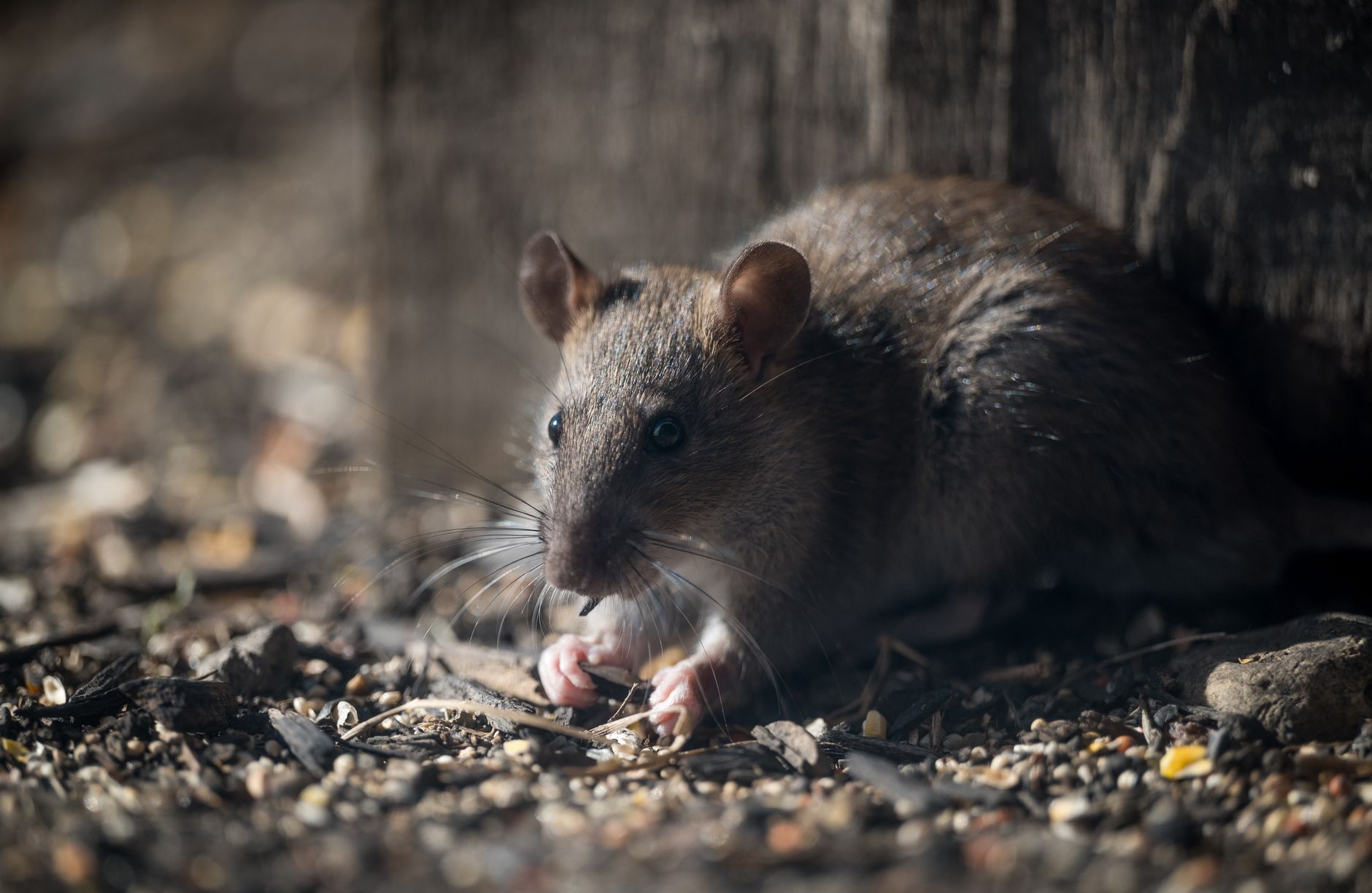 Dark-furred brown rat eating seeds on the ground, next to a wooden plank
Why an annual contract requires a vote, not just a one-off intervention
The difference between an emergency and a recurring contract
The managing agent has immediate room for manoeuvre. Article 18 of the Act of 10 July 1965 requires them to ensure the preservation and maintenance of the building, and to take the necessary measures on their own initiative in an emergency. A rat invasion in a bin room, posing a health risk to residents, falls squarely within that framework: the agent calls in a contractor, pays, and reports back at the next general meeting.
What the managing agent cannot do alone is commit the condominium to a multi-year or recurring contract. As soon as you are talking about a subscription covering 4 to 12 visits a year, a network of secured bait stations maintained throughout the year and regular reporting, you leave the realm of emergency and enter that of planned day-to-day management. This expense must appear in the provisional budget, and the contract must be approved by the general meeting.
That is precisely where things get stuck: many managing agents string together one-off emergency interventions for three years, at a cumulative cost far higher than an annual contract, simply because no resolution was ever properly prepared.
What the departmental health regulations say
The Règlement sanitaire départemental (RSD), whose national model is adopted in every département of the Île-de-France region, requires owners and managers to keep premises and their surroundings permanently clean and to ensure the control of rodents and insects there. Articles 119 to 121 and 130 of the model RSD explicitly address rodent and insect control in buildings, waste storage areas and crawl spaces.
In other words, the condominium has no choice as to whether, only as to how. A co-owner who votes against any control measure does not remove the obligation: they simply expose the condominium association to a formal notice from the municipal hygiene and health department, or even to enforcement works carried out ex officio at the association's expense. This is an argument worth including in the explanatory note attached to the notice of meeting; it radically changes the tone of the debate.
Which majority applies to voting a rodent control contract?
In the vast majority of cases: Article 24
A routine maintenance contract relating to the preservation of the building falls under the Article 24 majority of the Act of 10 July 1965: a majority of the votes cast by co-owners present, represented or voting by post. Abstentions do not count. It is the most easily achieved majority, and it applies to:
- entering into or renewing an annual contract for rodent and insect control in the common areas;
- approving the provisional budget that includes this line item;
- approving a collective treatment plan against bed bugs or cockroaches in the common areas.
When does it shift to Article 25?
The absolute majority under Article 25 (a majority of the votes of all co-owners, whether present or not) becomes necessary when the resolution goes beyond maintenance and involves works or equipment:
| Subject of the resolution | Majority | Comment |
|---|---|---|
| Annual rodent control contract for the common areas | Article 24 | Routine maintenance |
| One-off curative treatment voted at the AGM | Article 24 | Same logic |
| Fitting rodent-proof grilles, sealing ducts, metal door sweeps | Article 25 | Works affecting the common areas |
| Replacing refuse chutes or enclosing the bin room | Article 25 | Modification of common equipment |
| Mandatory treatment inside private units funded by the association | Article 25 | Then Article 25-1 if the vote fails |
The classic pitfall: a single resolution combining "annual contract + works to seal off service ducts." If it is voted as a block under Article 24, a co-owner can seek its annulment. Always split it into two separate resolutions, each stating the applicable majority.
The case of private units
The condominium association cannot impose treatment inside a dwelling without a legal basis. That said, for bed bugs or German cockroaches, a stairwell-by-stairwell treatment plan has no chance of succeeding if the flats are not inspected. The practical solution: vote a resolution authorising the managing agent to arrange the inspection and treatment of private units, at the association's expense, with allocation by stairwell or by block, and a schedule for access. This is the approach set out in our article on bed bugs throughout an entire building, where a single occupant refusing access is enough to restart the infestation.
Documents to attach to the notice of meeting
This is where 80% of rejections are decided. The decree of 17 March 1967 requires that the notice of meeting be accompanied by the documents enabling co-owners to make an informed decision. For a "rodent control contract" resolution, this means at a minimum:
- The quote or quotes, with their detailed content: number of visits, exact scope (cellars, bin rooms, plant rooms, service ducts, courtyards, car parks), number and type of bait stations, products and active substances, response time following a report, reporting arrangements.
- The explanatory note: findings on the infestation, history of reports, cumulative cost of one-off interventions over the past two years, reminder of the RSD.
- The draft contract where the provider supplies one, or at the very least its general terms and the length of commitment.
- The provider's certifications: Certibiocide for applicators and, where relevant, CEPA EN 16636 certification, which attests to a standardised pest management process.
A quote with no priced scope, no frequency and no response time is not a quote: it is a sales brochure. It allows no comparison, and it offers the association no protection in the event of failure.
To build these documents in advance, the most effective approach is to start from a reference document describing the property portfolio and the expected standards. Our guide to the pest control specification for a social landlord or managing agent details the clauses to insist on and the evidence to request.
Competitive tendering: mandatory or not?
The threshold set by the general meeting
Article 21 of the 1965 Act provides that the general meeting sets an amount above which competitive tendering becomes mandatory for contracts and procurement, and that the condominium board must then be consulted. This threshold is voted on by the Article 25 majority. In many Paris-region condominiums, it sits between €3,000 and €10,000 excluding VAT.
In practice, an annual rodent control contract for a building of 40 to 80 units is often negotiated at between €800 and €3,000 a year: it therefore falls below the threshold, and competitive tendering is not legally mandatory. It remains strongly advisable. Two or three comparable quotes in the notice of meeting defuse 90% of objections during the session, and allow the condominium board to issue a reasoned opinion.
How to make quotes genuinely comparable
Three offers covering different scopes cannot be compared. The method that works is to send every candidate the same document: basement plans, list of premises, number of units, history of reports, and the response grid to complete. A condominium board that prepares this file with a ring binder with dividers and a log book holds a genuine tender file, enforceable against the chosen provider.
Insist that each quote prices separately:
- the initial set-up (survey, installation of bait stations, station layout plan);
- the recurring subscription (number of visits, duration of each visit, premises covered);
- additional interventions following a report (unit price, contractual response time);
- the insect control component, if included;
- any disinfection of soiled premises, which follows its own logic and standard (NF T72-281 for airborne disinfection processes).
Drafting the resolution: wording that gets approved
A vague resolution gets lost in debate. Here is the structure of a robust text.
Resolution no. X — Conclusion of an annual contract for rodent and insect control in the common areas (Article 24 majority)
The general meeting, having examined the quotes notified with the notice of meeting (companies A, B and C), the managing agent's explanatory note and the opinion of the condominium board, resolves to entrust to ……… the rodent and insect control services for the common areas of the building, in accordance with quote no. ……… dated ………, for an annual amount of ……… € including VAT, for a term of one year renewable by tacit renewal up to a maximum of three years, terminable by the managing agent at the request of the condominium board subject to three months' notice.
The general meeting authorises the managing agent to sign the contract, to enter the expense in the provisional budget under the heading "maintenance of the common areas," and to forward each intervention report to the condominium board.
The four points that make the difference: the maximum amount, the term with an exit option, the budget heading (and therefore the allocation key) and the reporting obligation. Without the last of these, nobody will know a year from now whether the contract achieved anything.
How is the expense allocated?
The rule: general charges
Rodent control in the common areas is an administration and building maintenance charge: unless the condominium by-laws provide otherwise, it is allocated according to the general charge shares (tantièmes). A co-owner on the sixth floor who has never seen a rat therefore contributes to the funding, just as they contribute to maintaining the roof.
Common exceptions
- Special charges by block or by stairwell: where the by-laws provide for separate allocation keys, treatment limited to Block B must be allocated on Block B's key. An error in the key is a classic ground for challenging the call for funds.
- Car parks and cellars: some by-laws impose a specific key for basements. A contract that mainly covers car parks must take this into account, a point we examine in our article on rats in the underground car park.
- Commercial units at street level: the commercial lease and the condominium by-laws may transfer part of the cost to the tenant. The question of who actually pays is addressed in our article on rodents in a ground-floor commercial unit.
- Fault of a co-owner: if the infestation originates in a specific unit (waste accumulation, deliberate feeding, a flat in a state of squalor), the association can hold the occupant liable and claim the additional cost from them. This requires evidence: dated reports, photographs, named intervention records.
Preparing the meeting: what swings the vote
A contract vote is won before the general meeting, with the condominium board. Four elements consistently carry weight:
- Comparative cost. Set out on a single line the total of emergency interventions over the past 24 months alongside the annual amount of the proposed contract. In most infested Paris-region condominiums, the latter is lower than the former.
- Evidence of the infestation. Time-stamped photographs of droppings, gnawed packaging, burrows at the base of walls. A simple night-vision motion detector placed in the bin room for a week produces images that put an end to any debate about whether the problem is real.
- The risk timeline. A formal notice from the hygiene department, a report to the town hall or a complaint from a neighbouring shopkeeper turn the expense into legal protection.
- Zero-cost prevention measures. The contract will never be enough on its own. Remind the meeting of the supporting measures: keeping the bin room genuinely closed, bins with intact lids, brush door sweeps on cellar access doors, and storing cleaning supplies in airtight storage boxes rather than in cardboard boxes on the floor. For the most exposed premises, a stainless steel ventilation grille fitted over basement windows costs a few tens of euros and permanently eliminates an entry point.
After the vote: keeping the contract alive
A contract that is voted and then forgotten loses its value by the second year. The condominium board must receive every intervention report, check the actual dates of visits, the number of bait stations used and any recommendations not acted upon. A dedicated binder, kept in the caretaker's lodge or at the managing agent's office, with product safety data sheets and the station layout plan, forms the file to present in the event of an inspection. More simply, a printed checklist and a rechargeable LED torch in the lodge allow the caretaker to carry out a monthly round of the sensitive points and raise the alarm before the infestation becomes visible again.
For condominiums that wish to put this approach on a long-term footing, multi-year commitment packages are set out on our annual contracts page, and dedicated support for property managers on the managing agents page. A priced proposal tailored to your portfolio can be requested from the quote page.
Key takeaways
- A recurring rodent control contract is voted at the general meeting by the Article 24 majority; only the associated works fall under Article 25, and these must be the subject of a separate resolution.
- Detailed quotes, the explanatory note and the provider's certifications must be notified with the notice of meeting, failing which the resolution risks rejection or annulment.
- Competitive tendering is only mandatory above the threshold set by the general meeting, but three comparable quotes covering the same scope remain the best persuasive tool.
- Allocation follows the general charges, unless a special key applies by block or basement, or the cost is contractually transferred to a commercial unit.
- The RSD mandates rodent control: the general meeting chooses the provider and the budget, not whether the obligation exists.
Got a pest problem?
Our certified technicians are available 7 days a week. Free quote within 24h.